


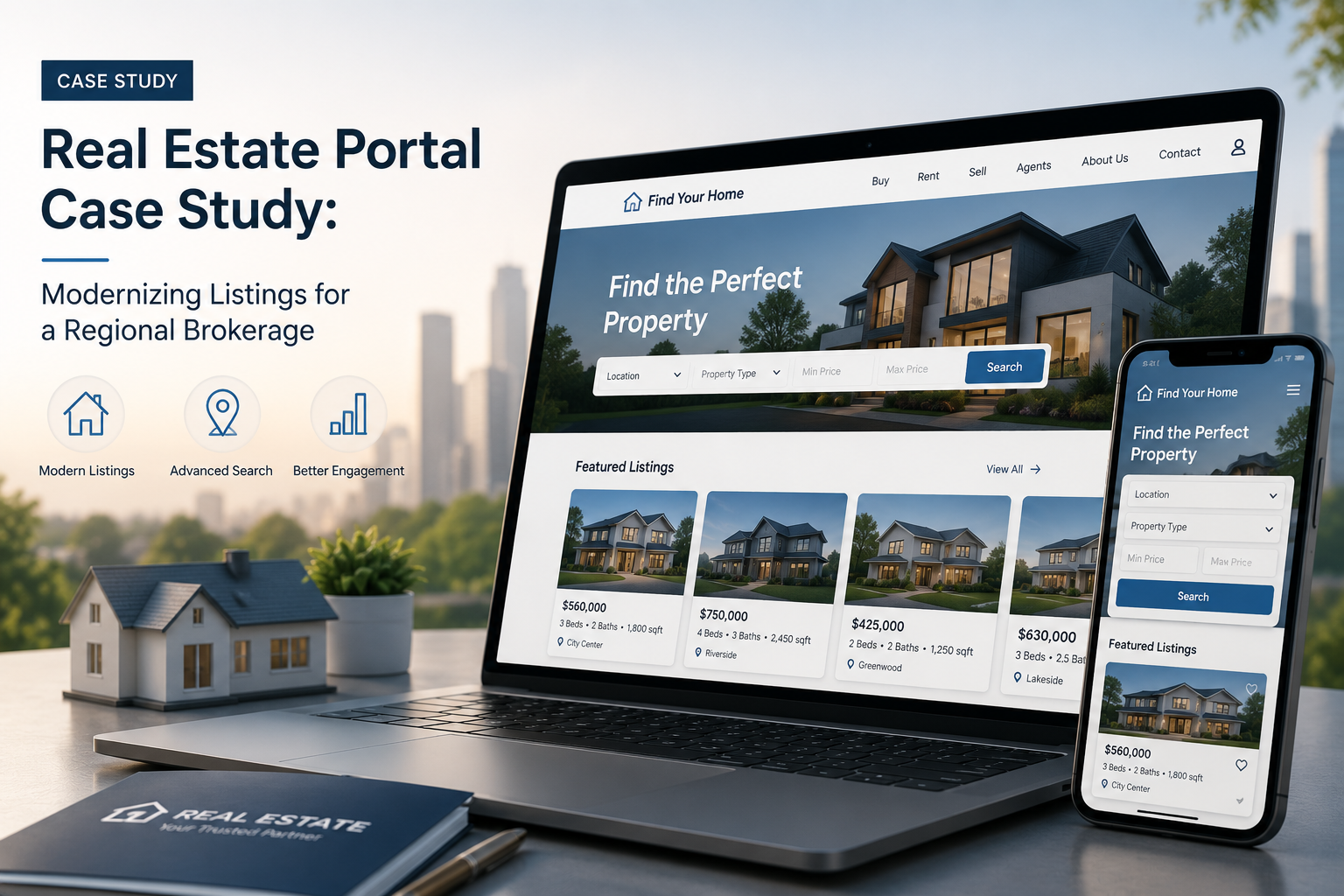
Real Estate Portal Case Study: Modernizing Listings for a Regional Brokerage
A regional real estate brokerage was relying on a dated, difficult-to-update listings website that gave buyers a poor browsing experience and gave agents almost no visibility into which listings were actually generating interest. This case study covers how we built a modern real estate portal with integrated lead management, and the impact it had on both buyer engagement and agent productivity.
The Challenge
The brokerage’s existing website created friction for both buyers browsing listings and agents trying to follow up on genuine interest.
Outdated Listing Search Experience
Buyers browsing the existing site faced slow, limited search filtering and listing pages that didn’t clearly present the photos, details, and neighborhood information buyers actually wanted before requesting a showing.
No Lead Tracking or Prioritization
Agents had no reliable way to see which listings were generating inquiries or how engaged a given lead actually was, meaning follow-up often happened based on gut feeling rather than actual buyer behavior.
Manual Listing Updates Across Multiple Agents
Listings were updated manually and inconsistently across the brokerage’s agent roster, leading to outdated pricing and availability information appearing on the public site.
Our Approach
We built a portal that combined a modern buyer-facing search experience with an integrated backend giving agents real visibility into lead activity.
Building Fast, Filterable Listing Search
We designed a search experience with fast, relevant filtering by location, price, and property features, alongside rich listing pages including photos, neighborhood information, and mortgage estimate tools to keep buyers engaged longer.
Adding Lead Activity Tracking
Every buyer interaction, saved listings, showing requests, repeat visits to a specific property, fed into a lead activity view agents could use to prioritize follow-up based on actual buyer engagement rather than guesswork.
Centralizing Listing Management
We built a centralized listing management system so agents update information in one place, with changes reflecting immediately across the public site rather than requiring separate manual updates in multiple locations.
The Results
Following launch, the brokerage saw improvements in both buyer engagement and agent efficiency.
Increased Buyer Engagement
Time spent browsing listings and the number of showing requests submitted through the portal both increased meaningfully compared to the previous site.
Improved Agent Follow-Up Efficiency
Agents reported being able to prioritize their follow-up time more effectively, focusing first on leads showing the strongest engagement signals rather than working through inquiries in the order they arrived.
More Consistent Listing Accuracy
Centralized listing management eliminated the outdated pricing and availability issues that had previously frustrated buyers browsing the public site.
What This Means for Similar Businesses
This result reflects a pattern common across real estate brokerages: a modern portal combining strong buyer-facing search with real lead visibility for agents improves outcomes on both sides of the transaction. If your brokerage is facing similar listing site limitations, our web application development team can help scope a similarly integrated portal for your specific agent workflow.
Key Takeaways
A fast, well-designed listing search experience directly affects how long buyers engage and how often they request showings. Lead activity tracking lets agents prioritize follow-up based on genuine buyer behavior rather than guesswork. Centralized listing management eliminates the accuracy problems that come from multiple agents updating information manually and separately, and buyer-facing improvements and agent-facing tooling both deserve equal attention in a real estate portal build.
Frequently Asked Questions
How does lead activity tracking work without feeling invasive to buyers?
Tracking focuses on aggregate engagement signals, saved listings, repeat visits, showing requests, rather than detailed personal browsing surveillance, giving agents useful prioritization signals without overstepping buyer privacy expectations.
Did agents need training to use the new portal effectively?
Some onboarding was provided to help agents understand the lead activity view and centralized listing management, though the interface was designed to be intuitive enough that most agents adapted quickly.
Can this type of portal integrate with an existing CRM?
Yes, integrating lead activity data with an existing CRM is a common extension of this type of portal, allowing agents to manage follow-up within tools they’re already using day to day.
How long did this real estate portal take to build?
Timeline depended on the specific scope of listing search features and lead tracking integration, with the core buyer-facing experience and agent tooling built and refined together rather than as separate phases.
Does a portal like this work for a single agent, not just a full brokerage?
Yes, though the lead prioritization and centralized management features matter most for brokerages with multiple agents managing overlapping listings and lead volume.
How much does a similar real estate portal cost?
Cost depends on your specific listing volume, search feature requirements, and lead tracking scope, so a general figure is only a rough guide. A detailed cost estimate scoped to your brokerage is the most reliable way to plan your budget.