


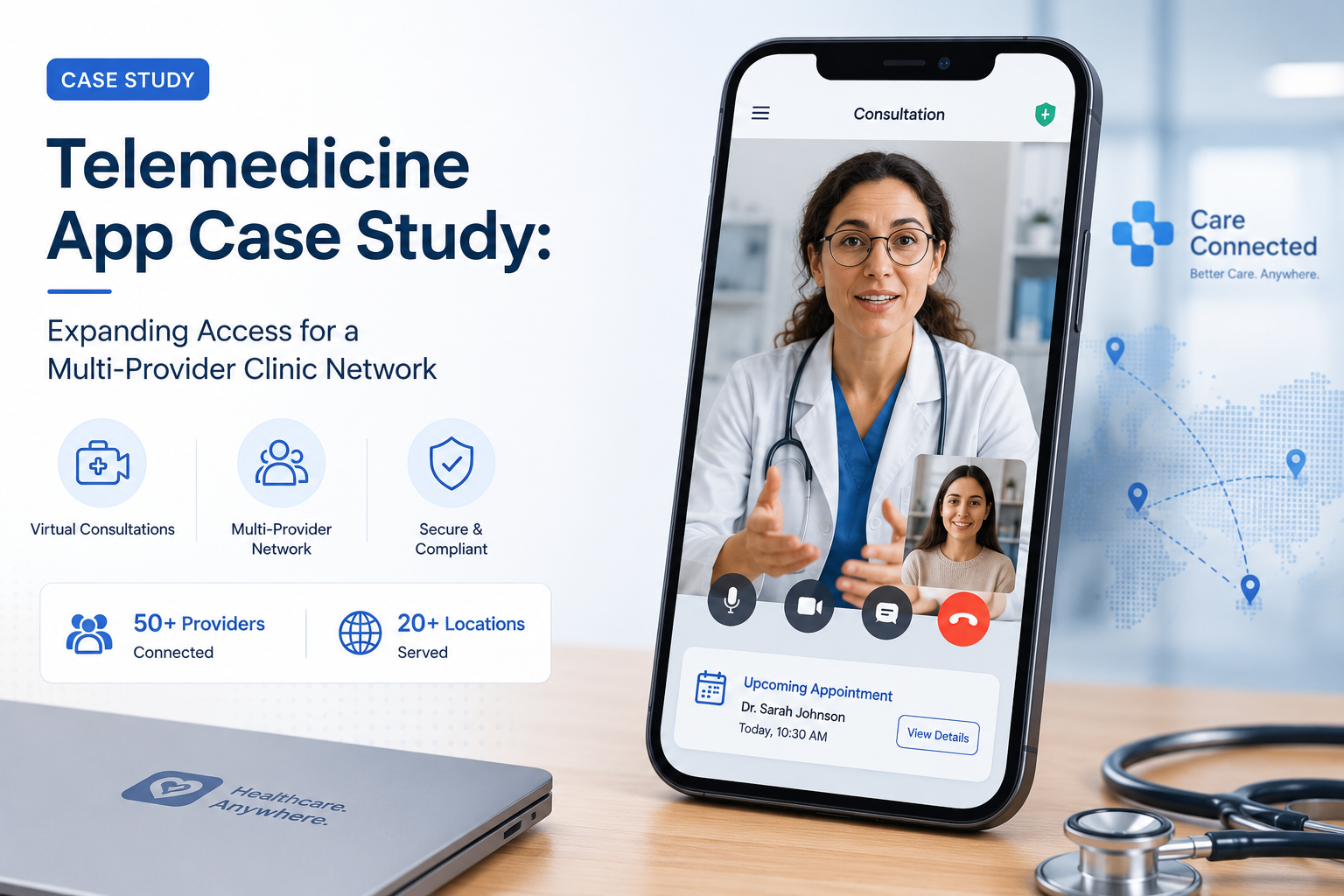
Telemedicine App Case Study: Expanding Access for a Multi-Provider Clinic Network
A multi-provider clinic network wanted to offer virtual consultations to patients who couldn’t easily visit in person, but needed a telemedicine platform built to handle video calls, scheduling, and patient records with the reliability and compliance that healthcare demands. This case study covers how we built a HIPAA-compliant telemedicine app connecting patients and providers across the network, and the impact it had on patient access and provider scheduling efficiency.
The Challenge
The clinic network faced a specific set of technical and compliance requirements that a typical consumer video app doesn’t need to address.
HIPAA-Compliant Video Infrastructure
Standard consumer video calling tools weren’t suitable for clinical use, since the network needed video infrastructure specifically built to meet healthcare data privacy and security requirements.
Provider Scheduling Across Multiple Locations
Providers worked across multiple clinic locations with varying availability, so the platform needed scheduling logic that accurately reflected real provider availability without requiring manual coordination between locations.
Integration With Existing Patient Records
The network’s existing electronic health record system needed to connect with the new telemedicine platform, so provider notes and patient history stayed consistent regardless of whether a visit happened in person or virtually.
Our Approach
We built the platform around healthcare-specific infrastructure requirements from the start, rather than adapting a general-purpose video app after the fact.
Building on HIPAA-Compliant Video Infrastructure
We integrated a video calling infrastructure provider specifically built to meet healthcare compliance standards, rather than attempting to build custom video infrastructure or retrofitting compliance onto a general-purpose video service.
Designing Unified Scheduling Across Locations
We built scheduling logic that pulled real-time availability across all of the network’s locations and providers, giving patients a single, accurate booking experience regardless of which provider or location they selected.
Connecting to the Existing Health Record System
We integrated the telemedicine platform with the network’s existing electronic health record system, ensuring visit notes and patient history remained unified across both in-person and virtual care.
The Results
Following launch, the clinic network successfully expanded virtual care access while maintaining the compliance and reliability healthcare requires.
Expanded Patient Access
Patients who previously faced transportation or scheduling barriers to in-person visits gained meaningful access to care through the virtual consultation option.
Improved Scheduling Efficiency
Unified scheduling across locations reduced the manual coordination previously required to match patients with available providers, improving overall appointment fill rates.
Consistent Patient Records Across Care Types
Provider notes from virtual visits flowed directly into the existing health record system, maintaining a single, consistent patient history regardless of visit type.
What This Means for Similar Businesses
This result reflects a pattern common across healthcare organizations expanding into virtual care: success depends on building on genuinely compliant infrastructure and integrating cleanly with existing clinical systems, rather than treating telemedicine as a separate, disconnected product. If your organization is considering a similar expansion, our telemedicine app development team can help scope a platform that fits your existing provider workflows and compliance requirements.
Key Takeaways
Healthcare video consultations require infrastructure specifically built for compliance, not a retrofitted consumer video tool. Unified scheduling across multiple locations and providers significantly improves both patient experience and appointment fill rates. Integration with existing health record systems keeps patient history consistent across in-person and virtual care, and building on the right compliant infrastructure from the start avoids costly rework later.
Frequently Asked Questions
Why can’t a standard video calling app be used for telemedicine?
Standard consumer video tools generally aren’t built to meet healthcare data privacy and security requirements, so a telemedicine platform needs video infrastructure specifically designed and certified for clinical use.
How does scheduling work across multiple clinic locations and providers?
The platform pulls real-time availability from all providers and locations into a single booking view, so patients see accurate options without staff needing to manually coordinate across separate location-based systems.
Does a telemedicine platform need to integrate with an existing EHR system?
It’s strongly recommended for any healthcare organization already using an electronic health record system, since integration keeps patient history and visit notes unified rather than fragmented across separate virtual and in-person systems.
What happens if a patient’s internet connection is unreliable during a virtual visit?
Reliable telemedicine platforms include fallback options, like audio-only continuation or easy reconnection, to handle connectivity interruptions without forcing patients to restart the entire visit.
Can a smaller, single-location practice use a similar telemedicine setup?
Yes. The core compliance and video infrastructure requirements apply regardless of practice size, though the scheduling coordination complexity is naturally lower for a single location compared to a multi-provider network.
How much does a similar telemedicine app cost?
Cost depends on your specific compliance requirements, number of locations, and EHR integration needs, so a general figure is only a rough guide. A detailed cost estimate scoped to your organization is the most reliable way to plan your budget.