


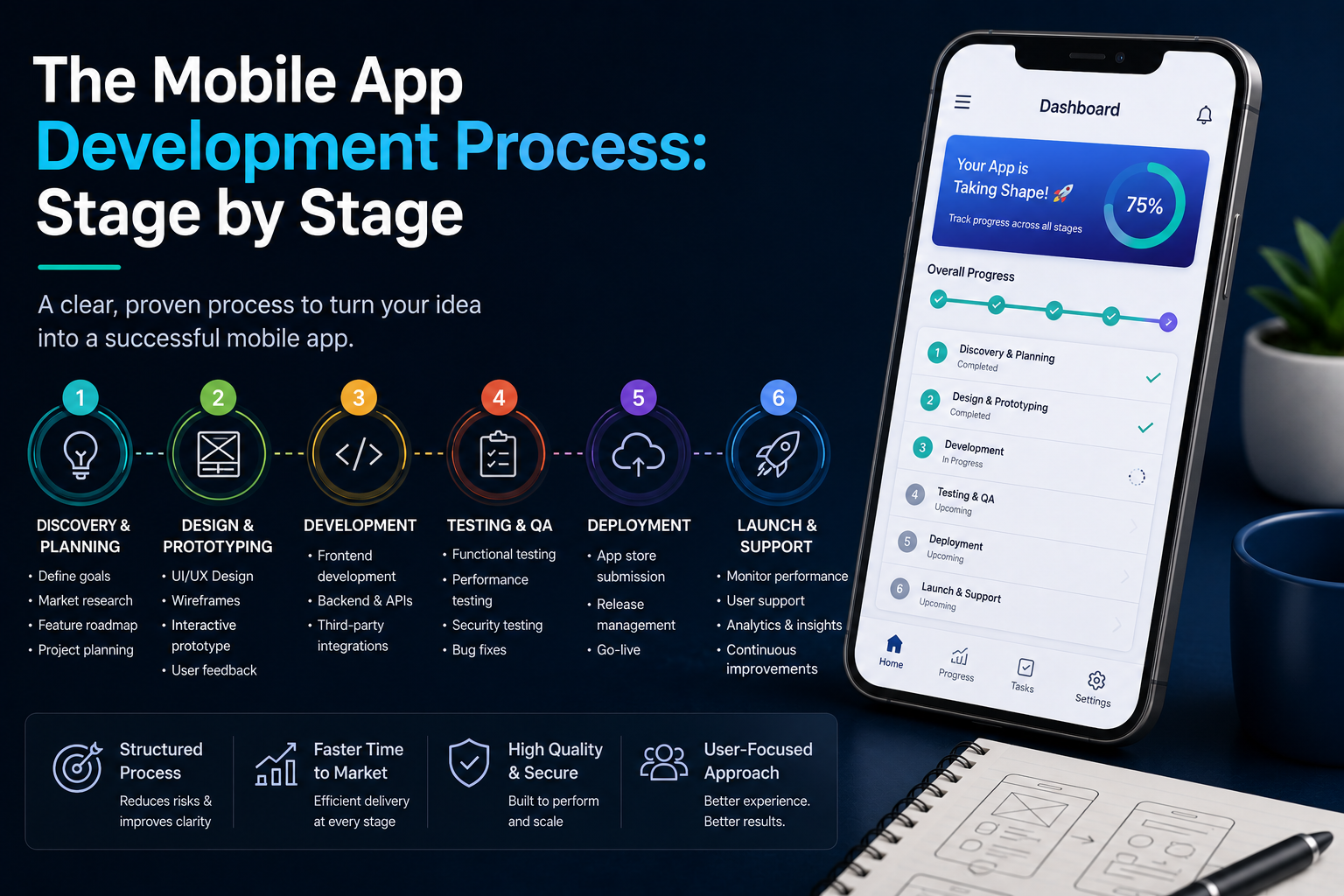
The Mobile App Development Process: Stage by Stage
Understanding the mobile app development process in detail, discovery, design, build sprints, QA, deployment, helps founders and product teams know what to expect at each stage and where delays or scope changes are most likely to happen. Many people evaluating a development partner focus heavily on the final deliverable without understanding the stages that lead there, which makes it harder to spot a rushed or poorly structured process before committing to a project. This post walks through each stage of a well-run mobile app development process, what happens at each one, and what a healthy version of that stage looks like.
Discovery and Technical Planning
Before any design or code work begins, a genuine discovery stage clarifies exactly what’s being built and why.
Requirements Gathering
This stage translates a business idea into specific, concrete feature requirements, resolving ambiguity upfront rather than discovering conflicting assumptions mid-development when they’re far more expensive to fix.
Technical Architecture Planning
Decisions about platform approach, backend structure, and third-party integrations get made during this stage, since these foundational choices are expensive to reverse once development is underway.
Scope and Timeline Agreement
A well-run discovery stage produces a clear, agreed-upon scope and realistic timeline, giving both the development team and the business a shared understanding of what “done” looks like for the first release.
Design and Prototyping
Once requirements are clear, design work translates them into concrete user flows and visual interfaces before any development code gets written.
Wireframing Core User Flows
Low-fidelity wireframes let the team validate the logical flow of key features cheaply, catching usability problems while they’re still simple sketches rather than after they’re built into working software.
Visual Design
Full visual design applies branding, typography, and polish to the validated wireframes, producing the actual screens developers will build against.
Prototype Testing
Testing a clickable prototype with real potential users, even informally, before development begins can surface usability issues that are far cheaper to fix at this stage than after the app is built.
Development Sprints
The actual build typically happens in iterative sprints, delivering working functionality incrementally rather than all at once at the very end.
Feature-by-Feature Development
Building core functionality first, then layering in secondary features, ensures there’s always a working, testable version of the app throughout development, rather than a collection of disconnected, unfinished pieces.
Regular Progress Reviews
Frequent check-ins between the development team and the business let issues get caught and addressed early, rather than surfacing as a surprise at the end of a long, opaque development period.
Adapting to Discoveries Mid-Build
Some technical or design realities only become clear once development is underway, and a healthy process accommodates reasonable adjustments without treating every change as a crisis or a reason to blow the entire scope open.
Quality Assurance and Testing
Before launch, a dedicated testing phase confirms the app works reliably across the range of conditions real users will actually encounter.
Functional Testing
Confirming that every feature works as intended, including edge cases and error conditions, catches problems that a quick internal demo often misses.
Device and Platform Testing
Testing across a meaningful range of device models and operating system versions, not just the newest devices, catches compatibility issues that narrower testing would miss.
Performance and Load Testing
If the app depends on backend infrastructure, confirming it performs correctly under expected real-world traffic, not just light development testing, prevents a successful launch from becoming a reliability failure.
Deployment and Launch
The final stage moves the tested app from development into the hands of real users.
App Store Submission
Preparing store assets and confirming compliance with app store guidelines before submission reduces the risk of rejection delays pushing back the intended launch date.
Post-Launch Monitoring
Watching for crashes, performance issues, and user feedback closely in the days immediately following launch allows problems to be caught and addressed quickly before they affect a large share of the user base.
Why the Process Matters as Much as the Outcome
A well-structured development process reduces risk at every stage, catching problems while they’re cheap to fix rather than discovering them in a finished, expensive-to-change product. Our mobile app development team follows this kind of structured process on every project, and our process page covers how we apply it across different types of engagements.
Key Takeaways
A genuine discovery stage resolves ambiguity and sets realistic scope before any design or development work begins. Wireframing and prototype testing catch usability issues cheaply, before they’re built into working code. Development in feature-by-feature sprints keeps a working, testable version of the app available throughout the build, and thorough QA across real device and network conditions catches problems before they reach actual users after launch.
Frequently Asked Questions
How long does each stage of the development process typically take?
Timeline varies significantly by project scope, but discovery and design generally represent a meaningful upfront investment before development sprints begin, since resolving ambiguity early saves considerably more time than fixing misunderstandings mid-build.
Can the scope change once development sprints have started?
Reasonable adjustments based on discoveries during development are normal and expected, but significant scope changes should be evaluated deliberately against timeline and cost impact rather than added informally without reassessing the plan.
Why is prototype testing important before development begins?
Usability issues caught in a clickable prototype are far cheaper to fix than the same issues discovered after the app has been built, since prototype changes involve adjusting a design file rather than rewriting working code.
What happens if QA testing finds significant issues close to the launch date?
A healthy process prioritizes fixing issues most likely to affect core functionality or app store approval first, addressing lower-priority issues in a fast-follow update if timeline pressure requires it, rather than delaying launch for every minor issue.
How involved should I be during the development sprints?
Regular check-ins and progress reviews are valuable for catching issues early and ensuring the build stays aligned with your vision, though the specific level of involvement can be tailored to your availability and preference.
How much does following this full development process typically cost?
Cost depends heavily on project scope and complexity at each stage, so a general figure is only a rough guide. A detailed cost estimate scoped to your specific project is the most reliable way to plan your budget.