


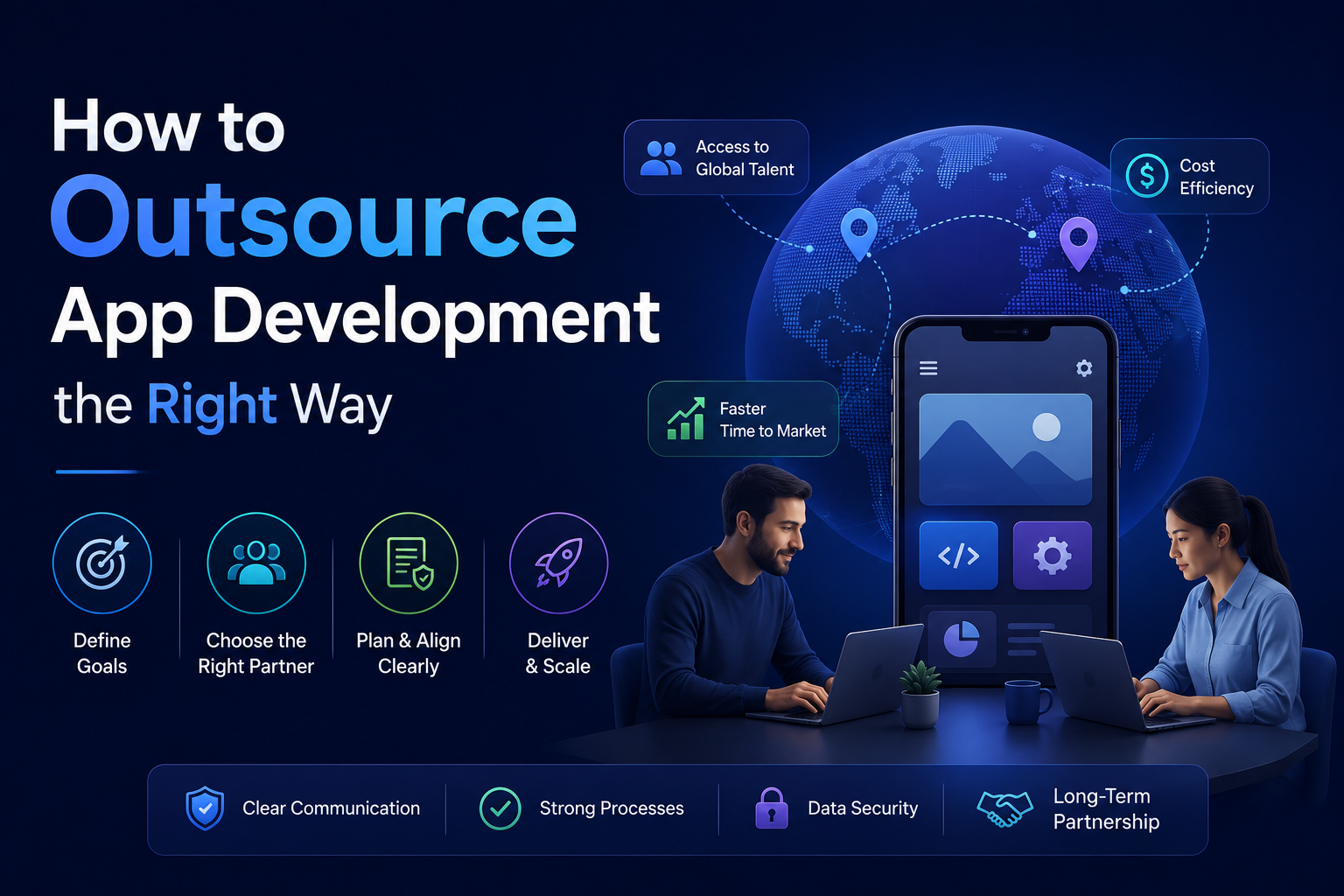
How to Outsource App Development the Right Way
Learning how to outsource app development successfully means understanding that the outcome depends as much on how you manage the engagement, clear requirements, regular communication, defined milestones, as on which specific company or individual developers you choose. Many outsourcing relationships underdeliver not because the development team lacked skill, but because the business side of the engagement, vague requirements, inconsistent communication, unclear success criteria, created avoidable friction and misalignment. This post covers the practical steps for outsourcing app development well, from preparing your requirements through managing the ongoing relationship.
Preparing Before You Start the Engagement
The groundwork you do before selecting an outsourcing partner significantly affects how smoothly the engagement goes.
Documenting Clear Requirements
Having a documented, specific description of what you need built, even if some details will be refined during discovery, gives any outsourcing partner a much stronger foundation than a vague verbal description of your general idea.
Defining Success Criteria Upfront
Deciding in advance what a successful outcome looks like, specific features working correctly, a target timeline, particular performance benchmarks, gives both you and your outsourcing partner a shared, concrete reference point throughout the engagement.
Understanding Your Own Availability for Involvement
Being honest about how much time you can realistically dedicate to reviewing progress, answering questions, and providing feedback helps set a realistic collaboration cadence that fits your actual availability rather than an idealized one.
Choosing the Right Outsourcing Partner
Selecting well matters enormously, and the right evaluation criteria go beyond just comparing rates.
Evaluating Relevant Portfolio Experience
A portfolio showing genuinely similar projects to yours, in complexity and category, is a stronger signal of fit than a large but generic portfolio spanning unrelated project types.
Assessing Communication Practices Early
How responsively and clearly a potential partner communicates during initial conversations offers a preview of what working together will actually feel like once you’re in an active engagement.
Understanding the Proposed Engagement Structure
Clarity around how the engagement will be structured, communication cadence, milestone reviews, how changes to scope get handled, helps you understand what to expect before committing.
Managing the Engagement Effectively
Once work begins, how you manage the relationship significantly affects the outcome.
Establishing Regular Check-In Cadence
Regular, scheduled check-ins, rather than only reactive communication when problems arise, help catch misalignment early and keep both sides genuinely informed about progress and any emerging issues.
Providing Timely, Specific Feedback
Reviewing progress promptly and giving specific, actionable feedback rather than vague impressions helps the development team course-correct efficiently rather than working for extended periods on a wrong assumption.
Handling Scope Changes Deliberately
When new requirements or changes emerge, which is common and expected, evaluating the timeline and cost impact deliberately, rather than informally adding requests without reassessing the plan, keeps the engagement on track.
Common Pitfalls to Avoid
Certain patterns consistently undermine outsourcing engagements, and awareness helps you avoid them.
Underspecifying Requirements Upfront
Vague initial requirements often lead to a delivered product that technically meets what was asked but misses what was actually needed, since ambiguity gets resolved by the development team’s best guess rather than your actual intent.
Infrequent Communication
Long gaps between check-ins mean problems and misalignments compound before anyone notices them, making infrequent communication one of the most common and preventable causes of outsourcing engagements going off track.
Treating Price as the Only Selection Criterion
Choosing purely based on the lowest quoted rate, without weighing portfolio relevance and communication quality, frequently leads to more expensive rework or a disappointing final product than a slightly higher-priced but better-fitted partner would have delivered.
Building a Successful Outsourcing Relationship
Outsourcing app development successfully comes down to thorough preparation, careful partner selection, and active, consistent engagement management throughout the project, not just finding a technically skilled team. Our mobile app development team works with clients specifically around this kind of structured, communicative engagement process.
Key Takeaways
Documenting clear requirements and defining success criteria before starting an engagement gives any outsourcing partner a much stronger foundation than vague initial direction. Evaluating a potential partner’s relevant portfolio experience and communication practices matters as much as their quoted rate. Regular check-ins and timely, specific feedback keep an engagement on track, catching misalignment early rather than after significant work has been completed based on a wrong assumption, and deliberately evaluating scope changes rather than informally accumulating them protects both timeline and budget.
Frequently Asked Questions
How detailed should my requirements be before starting an outsourcing engagement?
Detailed enough to clearly communicate what you need built and why, even if some specifics get refined during a discovery phase, since vague initial requirements are one of the most common sources of misalignment in outsourcing engagements.
How often should I communicate with an outsourced development team?
Regular, scheduled check-ins, rather than only reactive communication when problems arise, help catch issues early, though the specific frequency should be calibrated to your project’s pace and your own availability.
Should I choose the outsourcing partner with the lowest quoted price?
Not necessarily. Price should be weighed alongside portfolio relevance and communication quality, since choosing purely on lowest cost frequently leads to more expensive rework than a well-fitted, slightly higher-priced partner would have required.
What should I do if scope changes come up during the project?
Evaluate the timeline and cost impact of any new requirement deliberately with your outsourcing partner, rather than informally adding requests without reassessing the overall plan, to keep the engagement on track.
How do I know if my outsourcing engagement is going well?
Regular, specific progress updates against your defined success criteria, along with responsive communication when questions or issues arise, are strong signals of a healthy engagement, while long silences or vague updates are worth addressing directly.
How do I get started outsourcing my app development project?
The right approach depends on your specific requirements and timeline, so a detailed conversation about your project is the most reliable way to begin a well-structured outsourcing engagement.