


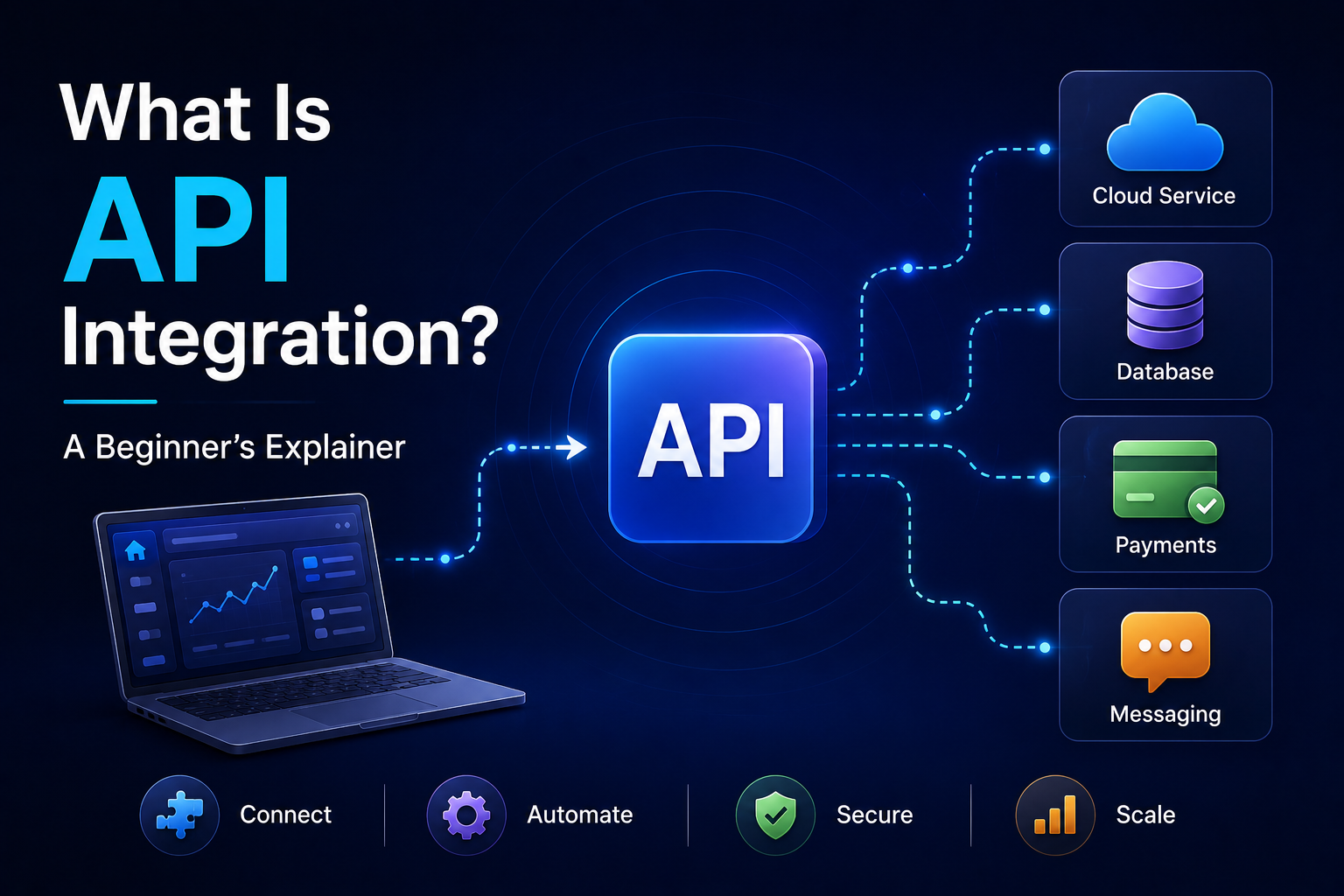
What Is API Integration? A Beginner’s Explainer
API integration is the process of connecting two or more software systems so they can share data and trigger actions in each other automatically, rather than requiring someone to manually export information from one system and import it into another. Understanding what API integration actually involves matters for any business relying on multiple software tools, payment processing, customer data, inventory, communication, since the difference between systems that talk to each other automatically and ones that require manual data transfer directly affects both efficiency and the risk of costly human error. This post explains what API integration is in plain language, how it actually works, and why it matters for businesses relying on multiple connected tools.
What an API Actually Is
Understanding the basic building block clarifies what integration is actually connecting.
A Defined Way for Systems to Communicate
An API, short for application programming interface, is essentially a defined set of rules that lets one piece of software request data or trigger an action in another piece of software, without needing to understand how that other software works internally.
Requests and Responses
At a basic level, using an API involves sending a request, asking for specific data or requesting a specific action, and receiving a response back, the requested information or confirmation that the action was completed.
Why APIs Exist
APIs let software companies expose specific, controlled functionality to other developers and systems without exposing their entire internal codebase, striking a balance between enabling useful integrations and maintaining security and control over their own systems.
What API Integration Actually Involves
Building an integration means connecting your specific systems using the APIs each one provides.
Connecting Two or More Systems
API integration work involves writing code that calls one system’s API to retrieve or send data, then processes and potentially sends that data to another system’s API, creating an automated flow between systems that previously operated independently.
Handling Data Format Differences
Different systems often structure their data differently, so integration work frequently involves translating data from one system’s format into whatever format the receiving system expects, a step that’s easy to underestimate but often represents significant integration effort.
Managing Authentication and Security
Most APIs require some form of authentication to ensure only authorized systems can access data or trigger actions, so integration work includes securely managing these credentials and following each API’s specific security requirements.
Why API Integration Matters for Businesses
Beyond the technical mechanism, integration has practical business implications worth understanding.
Eliminating Manual Data Entry
Without integration, moving data between systems often requires someone manually exporting from one tool and importing into another, a process that’s slow, doesn’t scale well, and introduces meaningful risk of human error.
Enabling Real-Time Data Consistency
Integrated systems can share updates automatically and immediately, keeping information consistent across tools rather than risking discrepancies that build up between systems only synced periodically or manually.
Supporting Automated Workflows
Once systems are integrated, actions in one system can automatically trigger appropriate responses in another, a new customer signup triggering a welcome email, a payment triggering an order fulfillment process, without manual intervention at each step.
Common Examples of API Integration
Understanding familiar, everyday examples helps ground the concept in practical terms.
Payment Processing Integration
When an online store processes a payment, it typically integrates with a payment gateway’s API to securely handle the transaction without needing to build payment processing infrastructure itself.
CRM and Marketing Tool Integration
Connecting a customer relationship management system with email marketing tools lets customer data flow automatically between the two, keeping marketing lists updated without manual synchronization.
Getting Started With API Integration for Your Business
Understanding what API integration is and why it matters sets the foundation for evaluating which of your business’s disconnected tools would benefit most from being connected. Our API integration services team can help identify and build the right integrations for your specific systems and workflows.
Key Takeaways
API integration connects separate software systems so they can share data and trigger actions automatically, eliminating the need for manual data transfer between tools. The process involves calling each system’s API, handling data format differences, and managing authentication securely. Integration eliminates manual data entry risk, enables real-time data consistency across tools, and supports automated workflows that trigger actions across systems without manual intervention at each step.
Frequently Asked Questions
Do I need custom development to integrate two software tools?
It depends on the tools involved. Some popular business tools offer pre-built integrations or connector platforms requiring little custom development, while more specific or less common combinations typically require custom integration work using each system’s API directly.
Is API integration secure?
When implemented properly, following each API’s authentication requirements and security best practices, integration is a secure and standard way for business systems to communicate, though security implementation quality varies based on how carefully the integration work is done.
How long does building an API integration typically take?
Timeline depends heavily on the complexity of the systems involved and how well-documented their APIs are, so a straightforward integration between well-documented systems generally takes less time than one involving complex data transformation or less mature API documentation.
What happens if one of the connected systems changes its API?
API providers occasionally update or change their APIs, which can require corresponding updates to any integration built against them, making it important to monitor for API changes and maintain integrations over time rather than treating them as a one-time setup.
Can I integrate more than two systems together?
Yes, businesses commonly integrate multiple systems together, creating a network of connected tools, though the complexity of managing and maintaining these connections generally increases with the number of systems involved.
How much does building an API integration cost?
Cost depends heavily on the specific systems involved and the complexity of the data being connected, so a general figure is only a rough guide. A detailed cost estimate scoped to your specific integration needs is the most reliable way to plan your budget.