


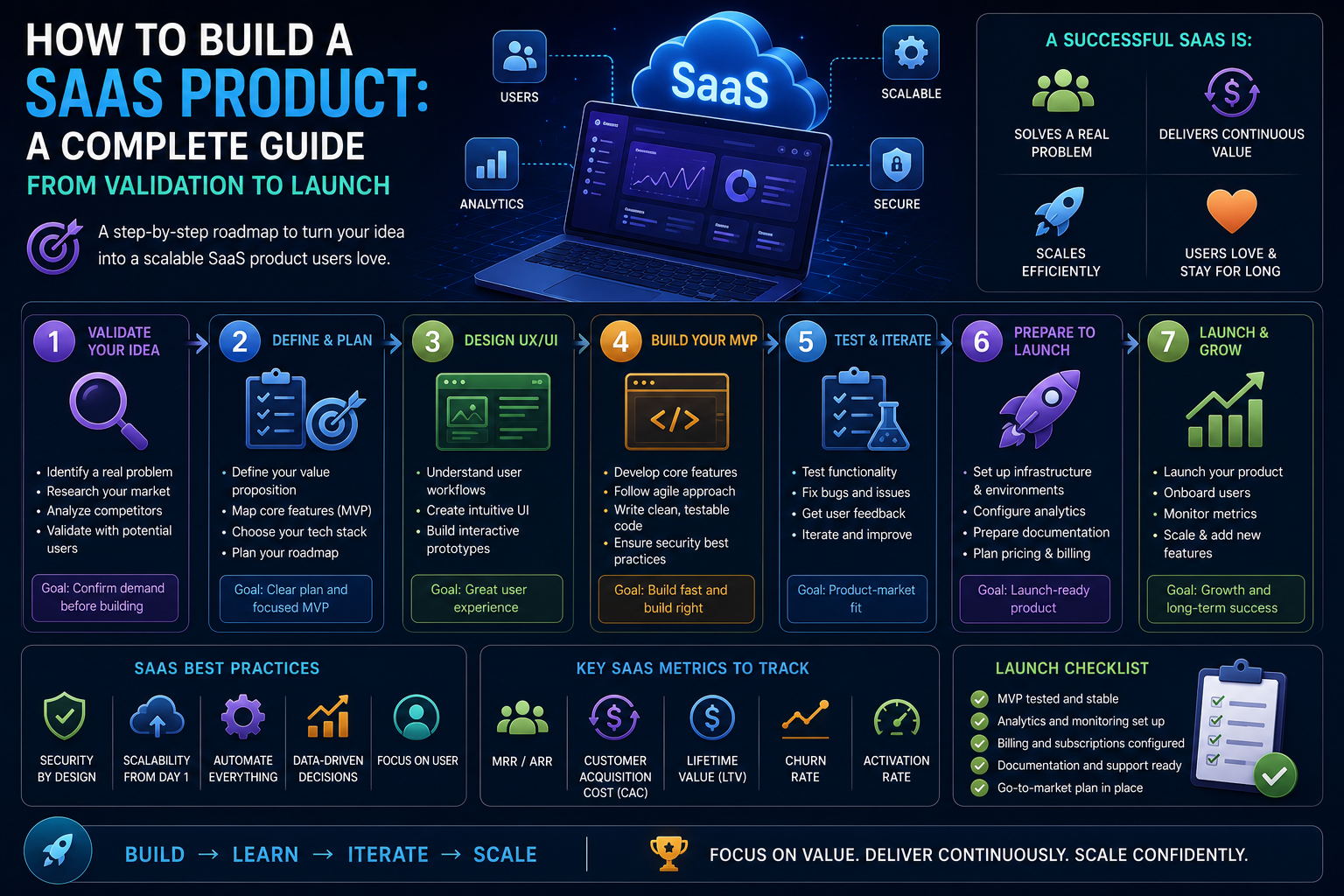
How to Build a SaaS Product: A Complete Guide From Validation to Launch
Learning how to build a SaaS product requires understanding a set of architectural decisions, multi-tenancy, subscription billing, role-based access, that don’t apply to a typical consumer app, since a SaaS product is fundamentally built to serve many different customer organizations from shared infrastructure rather than a single user base. Many first-time SaaS founders underestimate this architectural complexity, treating their SaaS idea like a standard app build and discovering the multi-tenant requirements only once real customers start onboarding. This guide walks through the process of building a SaaS product, from validating the idea through architecture decisions and launch, so you understand the full picture before committing development resources.
Validating Your SaaS Idea
Before any architecture or development work begins, confirming genuine demand protects against building a product no one will actually pay for.
Identifying a Specific, Painful Problem
SaaS products succeed when they solve a specific, clearly felt problem for a defined customer segment, rather than a vague, general productivity improvement that’s harder to communicate and sell.
Talking to Potential Customers Directly
Conversations with potential customers about their current workflow and pain points, rather than pitching your specific solution directly, reveal whether the problem is genuinely painful enough that people would pay to solve it.
Assessing Willingness to Pay
Testing genuine willingness to pay, through early access pricing or letter-of-intent conversations, provides much stronger validation than expressed interest or enthusiasm alone.
Core Architecture Decisions
SaaS products require specific architectural decisions upfront that are expensive to retrofit later.
Multi-Tenant Architecture
Deciding how customer data will be isolated and managed across your shared infrastructure needs to happen at the architecture stage, since retrofitting proper multi-tenancy onto a system not designed for it later is a significant, costly undertaking.
Subscription Billing Design
Planning your pricing model, plan tiers, usage-based components, and how upgrades and downgrades work, shapes both your billing system architecture and how you present pricing to prospective customers.
Role-Based Access and Permissions
Most B2B SaaS customers expect to manage their own users and permissions within your product, so building this administrative capability into the core architecture, not as a later addition, matters for credibility with business customers.
Scoping Your MVP
Disciplined MVP scoping is as important for SaaS products as for any other type of software, arguably more so given the additional architectural complexity involved.
Focusing on Your Core Value Proposition
Your MVP should deliver the specific value that validated your idea, with basic multi-tenancy and billing, rather than attempting the full platform vision with every conceivable feature from the first release.
Deferring Enterprise-Readiness Features
Advanced security certifications, detailed audit logs, and sophisticated admin controls can generally wait until you’re pursuing larger customers who specifically require them, rather than building them into an initial release aimed at smaller customers.
Choosing Build vs. Buy for Supporting Infrastructure
Billing, authentication, and email infrastructure are commonly handled through established third-party services rather than built in-house, letting your development effort focus on your product’s actual differentiation.
Launching and Iterating
Getting a SaaS product built is only part of the process; a thoughtful launch and iteration approach matters just as much for long-term success.
Onboarding Design
A smooth onboarding experience that gets new customers to their first meaningful value quickly significantly affects both conversion and long-term retention, making it worth deliberate design attention beyond just functional completeness.
Building Feedback Loops With Early Customers
Close relationships with your first customers, actively seeking their feedback and understanding their usage patterns, provide invaluable guidance for what to build next as you move beyond the initial MVP.
Getting Expert Help Building Your SaaS Product
Building a SaaS product well requires navigating validation, multi-tenant architecture, and billing decisions that compound over the life of the product, and experienced guidance at these decision points often saves considerable time and cost. Our SaaS development team can help scope a realistic MVP and the architecture to support your product as it grows.
Key Takeaways
Validating a SaaS idea requires confirming genuine, painful demand and willingness to pay, not just expressed enthusiasm from potential customers. Multi-tenant architecture, subscription billing, and role-based access are core requirements that need to be planned at the architecture stage, not retrofitted later. A disciplined MVP scope focused on your core value proposition, with enterprise-readiness features deferred, keeps initial development manageable, and thoughtful onboarding design and early customer feedback loops matter as much as the technical build itself.
Frequently Asked Questions
How is building a SaaS product different from building a typical app?
SaaS products require multi-tenant architecture, subscription billing, and role-based access management to serve many customer organizations from shared infrastructure, requirements a typical single-user consumer app doesn’t need to address.
Should I build billing infrastructure myself or use a third-party service?
Most SaaS companies use a third-party billing and subscription management service rather than building billing logic in-house, since correctly handling edge cases like prorated upgrades and failed payments is more complex than it initially appears.
Do I need enterprise security certifications for my first SaaS release?
Generally not. Many SaaS companies launch without formal security certifications and add them later as they pursue larger enterprise customers who specifically require them, allowing this cost to be deferred until it’s actually needed.
How do I validate a SaaS idea before building anything?
Direct conversations with potential customers about their current workflow and pain points, combined with testing genuine willingness to pay through early access pricing, provide much stronger validation than general enthusiasm about your proposed solution.
What’s the biggest architectural mistake first-time SaaS founders make?
Treating a SaaS product like a standard single-user app and only discovering multi-tenant architecture requirements once real customers start onboarding is one of the most common and costly mistakes, since retrofitting this later is significantly more disruptive than planning for it upfront.
How much does it cost to build a SaaS product?
Cost depends heavily on your specific multi-tenancy, billing, and feature requirements, so a general figure is only a rough guide. A detailed cost estimate scoped to your specific SaaS idea is the most reliable way to plan your budget.