


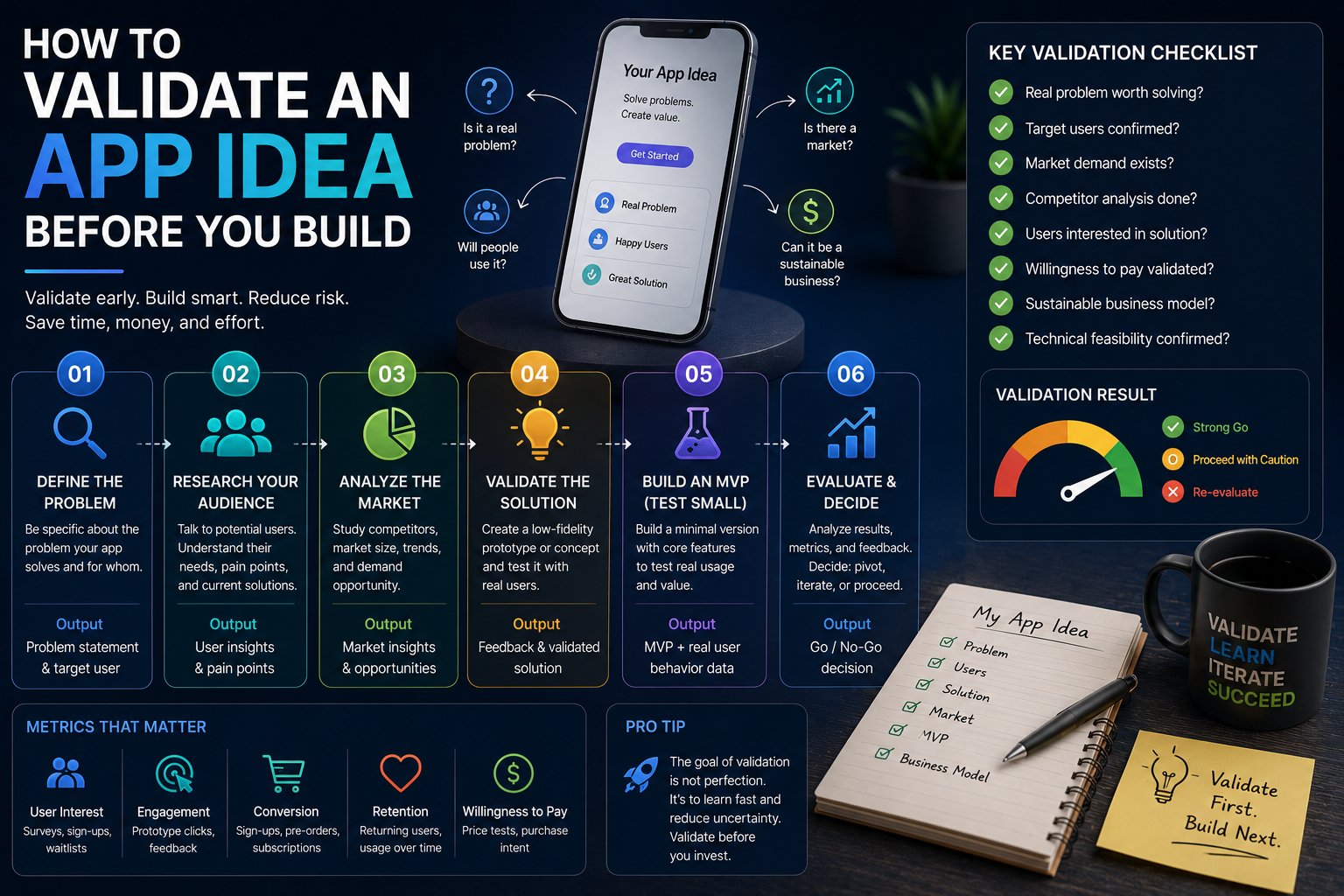
How to Validate an App Idea Before You Build
Learning how to validate an app idea properly is what separates founders who build something people actually want from those who spend months and significant budget on an app that launches to silence because the underlying assumption was never really tested. Validation isn’t a single technique; it’s a set of practical methods, landing page tests, direct customer conversations, pre-order commitments, that each provide different kinds of evidence about whether real demand exists before you commit to full development. This post walks through specific, actionable validation techniques you can use before writing a single line of code, and how to interpret the results honestly.
Landing Page Tests
A landing page test measures genuine interest by asking people to take a real action before the product exists.
Building a Simple Landing Page
A landing page describing your app’s core value proposition, with a clear call to action, joining a waitlist, signing up for early access, gives you a way to measure real interest without building anything beyond the page itself.
Driving Targeted Traffic
Sending relevant, targeted traffic to the landing page, through small paid ad spend or organic outreach to your actual target audience, matters more than raw traffic volume, since irrelevant visitors tell you nothing useful about your actual target market’s interest.
Interpreting Conversion Rates Honestly
A landing page conversion rate only means something in the context of how targeted the traffic was and what action you asked visitors to take, so resist the temptation to interpret a mediocre result optimistically just because you want the idea to work.
Direct Customer Conversations
Talking directly to potential users reveals nuance that quantitative tests alone can’t capture.
Asking About Problems, Not Solutions
Asking potential users to describe their current problems and workarounds, rather than asking whether they’d use your specific proposed solution, produces more honest, useful signal, since people tend to be politely agreeable when asked directly if they’d use something you’re excited about.
Identifying Existing Workarounds
If potential users are already using an imperfect manual process or unrelated tool to solve the problem your app addresses, that’s a stronger signal of real, existing demand than enthusiasm expressed about a hypothetical solution.
Recognizing Polite Positive Feedback
Distinguishing genuine enthusiasm from polite, non-committal positivity requires paying attention to specific, detailed responses versus vague agreement, since people are naturally inclined to be encouraging even about ideas they wouldn’t actually pay for or use.
Pre-Orders and Early Commitment
Asking for a real commitment, even a small one, before building reveals far more than expressed interest alone.
Testing Willingness to Pay
Offering early access at a discounted price in exchange for payment upfront, before the product exists, tests genuine willingness to pay in a way that survey responses about hypothetical pricing simply can’t replicate.
Building a Waitlist With Genuine Commitment
A waitlist that requires some small effort or commitment beyond providing an email address, answering a few qualifying questions, sharing specific context about their need, filters out low-intent signups that would otherwise inflate your perceived validation.
Analyzing Competitor and Market Signals
Existing market activity provides validation evidence that doesn’t require any direct outreach on your part.
Studying Competitor Reviews and Complaints
Reading reviews and complaints about existing competitor products often reveals specific, unmet needs, gaps you can address directly, providing concrete direction for what your app should do differently.
Assessing Market Size Realistically
Understanding roughly how many people or businesses actually experience the problem you’re solving helps calibrate whether the market is large enough to support a sustainable app, even if individual validation signals look promising.
Turning Validation Into a Scoped MVP
Once your validation process provides genuine evidence of demand, that evidence should directly shape your MVP scope, focusing development on the specific value proposition that validation confirmed people actually want. Our MVP development team can help translate validated demand into a realistic, well-scoped first release, and our app idea validator tool can help you work through this process in more structured detail.
Key Takeaways
Landing page tests measure genuine interest through real action, not just expressed enthusiasm, provided traffic is targeted and results are interpreted honestly. Direct conversations about problems and existing workarounds reveal more honest signal than asking people directly whether they’d use your specific idea. Pre-orders and paid commitments test genuine willingness to pay in ways survey responses can’t replicate, and studying competitor reviews and complaints often reveals specific, unmet needs worth addressing directly in your product.
Frequently Asked Questions
How much traffic do I need for a meaningful landing page test?
There’s no universal number, but targeted traffic quality matters more than raw volume, since even a smaller sample of genuinely relevant visitors produces more useful signal than a larger sample of irrelevant traffic.
Why shouldn’t I just ask people directly if they’d use my app?
People tend to be politely encouraging about ideas presented to them directly, which produces overly optimistic signal compared to asking about their actual current problems and workarounds without revealing your specific proposed solution upfront.
Is a waitlist sign-up a strong validation signal on its own?
A simple email waitlist is a relatively weak signal on its own, since it requires minimal commitment, but adding qualifying questions or a small commitment step strengthens the signal considerably.
Should I ask for payment before building anything?
Testing willingness to pay through pre-orders or discounted early access is one of the strongest validation signals available, since it requires genuine commitment rather than just expressed interest, though it works best once you have some initial positive signal from other methods first.
What if my validation results are mixed or unclear?
Mixed results are common and don’t necessarily mean the idea is wrong, but they suggest revisiting your core value proposition or target audience before committing significant development budget, rather than proceeding on ambiguous evidence.
How do I turn validated demand into an actual app?
Once you have genuine validation evidence, translating it into a scoped, validated MVP build is the next step, focusing development specifically on what your validation process confirmed people actually want.