


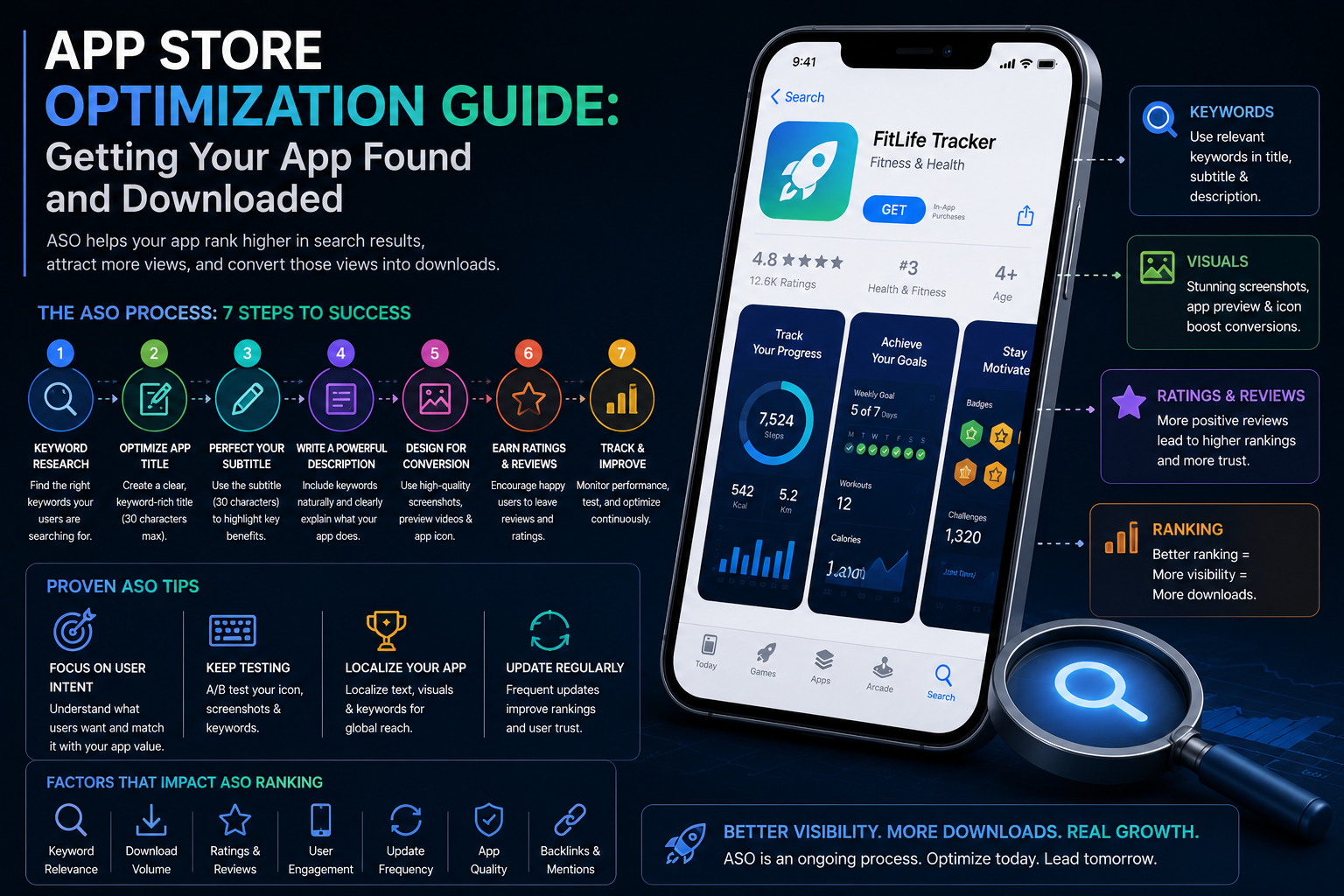
App Store Optimization Guide: Getting Your App Found and Downloaded
App store optimization determines whether a well-built app actually reaches the users it was designed for, since even the best app provides no value sitting unfound in a store with millions of competing listings. Many teams invest heavily in development and treat store optimization as an afterthought handled quickly right before launch, when in reality the elements that drive discoverability and conversion, keywords, screenshots, ratings, deserve the same deliberate attention as the app’s actual features. This guide covers the practical, high-impact elements of app store optimization that genuinely move download numbers, rather than superficial tactics with limited real effect.
Keyword Research and Optimization
Getting found in store search starts with understanding what your potential users are actually searching for.
Identifying Relevant Search Terms
Researching the specific terms potential users search for when looking for an app like yours, rather than guessing based on how you’d describe the app internally, often reveals meaningfully different language than your own internal terminology.
Balancing Search Volume and Competition
Highly competitive keywords are harder to rank for, so identifying terms with meaningful search volume but somewhat lower competition often produces better practical results than chasing only the most obvious, high-competition terms.
Where Keywords Actually Matter
App title, subtitle, and dedicated keyword fields carry more weight for search ranking than the general description text, so keyword placement should be prioritized accordingly rather than spread evenly across all available text fields.
Visual Assets That Convert
Once a user finds your listing, screenshots and preview content determine whether they actually download it.
Screenshot Strategy
Screenshots should communicate your app’s core value proposition within the first two or three images, since many users don’t scroll through an entire screenshot gallery before deciding whether to download.
App Preview Videos
A short preview video showing the app in actual use can meaningfully improve conversion compared to static screenshots alone, particularly for apps where the interaction itself, not just the interface, is part of the value proposition.
Consistent Visual Branding
Screenshots and preview content that align visually with your broader marketing materials create a more cohesive, trustworthy impression than a disconnected, purely functional set of interface captures.
Ratings and Reviews
Ratings directly affect both conversion and, on some platforms, search ranking, making review management a genuine optimization lever, not just a reputation concern.
Prompting for Reviews at the Right Moment
Asking users to rate the app immediately after a positive interaction, completing a task successfully, reaching a milestone, produces meaningfully better response rates than a generic prompt disconnected from a positive moment in the user’s experience.
Responding to Reviews
Responding thoughtfully to reviews, especially negative ones, shows prospective users that the team is actively engaged and addressing issues, which can offset the negative impression of the original review itself.
Addressing Root Causes Behind Negative Reviews
Patterns in negative reviews often point to genuine product issues worth fixing, and addressing the underlying problem does more for long-term ratings than any amount of review response management alone.
Ongoing Optimization and Testing
App store optimization isn’t a one-time setup task; it benefits from ongoing testing and refinement based on real performance data.
A/B Testing Store Listing Elements
Testing different screenshot orders, descriptions, or preview videos against each other reveals what actually resonates with your specific audience, rather than relying on general best practices that may not fit your particular app.
Monitoring Competitor Listings
Periodically reviewing how competing apps present themselves and what keywords they target helps identify opportunities or gaps in your own optimization strategy.
Building Optimization Into Your Launch Plan
App store optimization deserves the same deliberate planning as core feature development, since even a genuinely excellent app underperforms if potential users can’t find it or aren’t convinced to download it from the listing alone. Our mobile app development team incorporates store optimization planning as part of the launch process, not an afterthought handled at the last minute.
Key Takeaways
Keyword research should reflect how real users search, not internal terminology, with priority placement in title and subtitle fields where it carries the most search ranking weight. Screenshots need to communicate core value within the first few images, since many users don’t scroll through an entire gallery before deciding. Ratings and reviews affect both conversion and search ranking, making prompt timing and thoughtful response strategy genuine optimization levers, and ongoing A/B testing of store listing elements reveals what actually resonates with your specific audience over time.
Frequently Asked Questions
How much do app store keywords actually affect download numbers?
Significantly, since keyword optimization determines whether your app appears in relevant search results at all, making it one of the highest-leverage optimization areas alongside conversion-focused visual assets.
Should I use the same screenshots on every app store?
Not necessarily. Different platforms have different display conventions and user expectations, so screenshots should be tailored to each store’s specific format and audience rather than assuming one set works identically everywhere.
When is the best time to ask users for a review?
Immediately following a positive interaction, completing a task, reaching a milestone, tends to produce meaningfully better response rates than a generic, disconnected prompt asking for a review at an arbitrary moment.
Does responding to negative reviews actually help?
Yes, thoughtful responses show prospective users the team is actively engaged, which can offset some of the negative impression left by the original review, though addressing the underlying issue matters even more for long-term rating trends.
How often should I update my app store listing?
Periodic review and testing, rather than a one-time setup, tends to produce better results over time, since user search behavior and competitive listings both evolve, and what worked at launch may not remain optimal indefinitely.
How do I know if my app store optimization strategy is actually working?
Tracking store listing conversion rate, from views to downloads, alongside keyword ranking over time gives you concrete data on whether your optimization efforts are genuinely improving discoverability and conversion.