


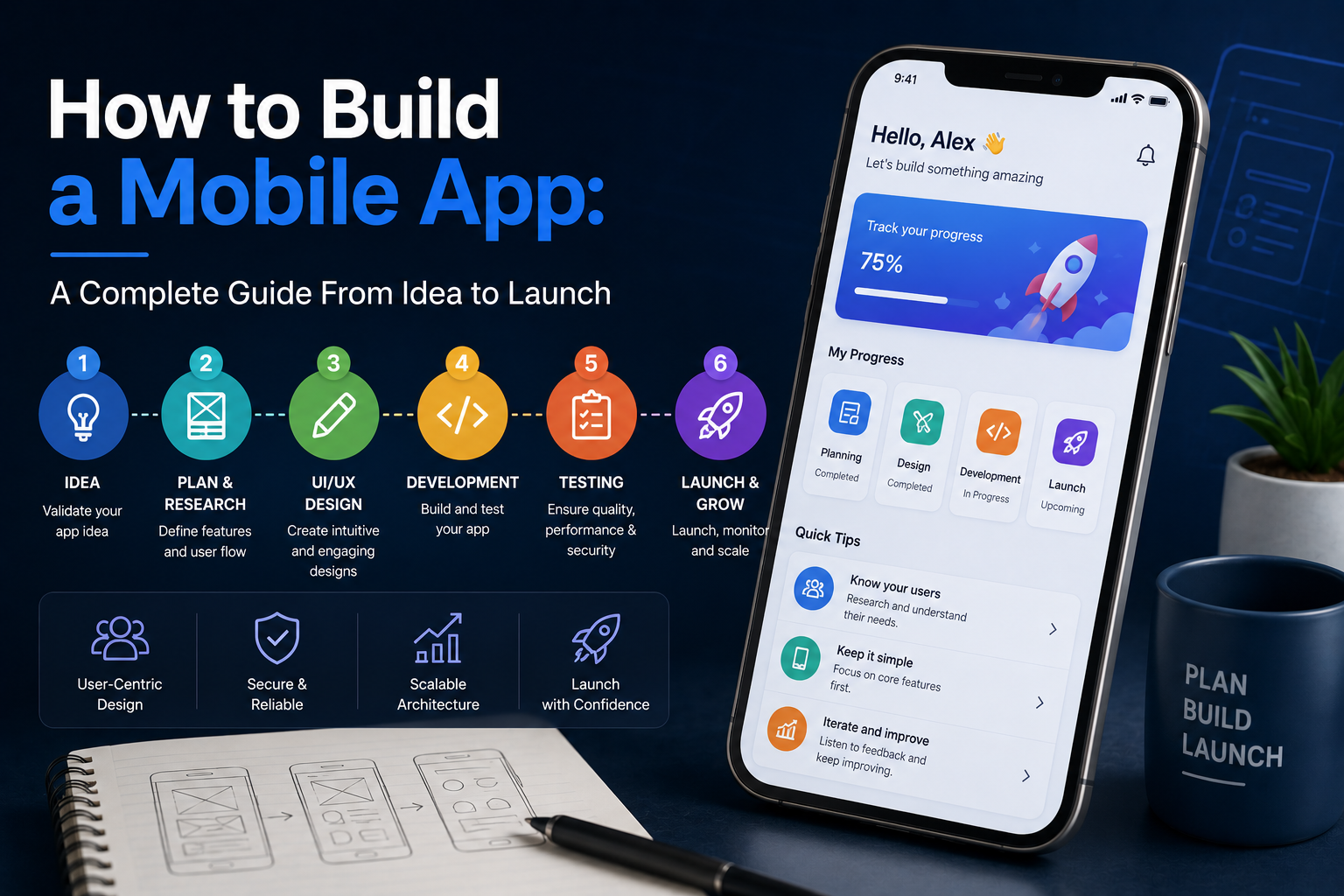
How to Build a Mobile App: A Complete Guide From Idea to Launch
Learning how to build a mobile app starts well before any code gets written, with a clear understanding of what problem the app solves and for whom, since the technical process of building an app is only as good as the idea and planning behind it. Many first-time founders jump straight to feature lists and design mockups without first confirming the underlying assumption, that people actually want this and will use it, which is exactly the gap that causes so many apps to launch to silence. This guide walks through the full process of building a mobile app, from initial validation through launch, so you understand not just the technical steps but the decisions that actually determine whether an app succeeds.
Validating Your App Idea Before You Build
Before any development begins, a genuine validation process protects you from investing in an idea that hasn’t been tested against reality.
Confirming Real Demand Exists
Look for evidence beyond your own conviction, people actively searching for a solution, complaining about existing options, or already using imperfect workarounds, since these signals indicate real, unmet demand rather than an idea that merely sounds appealing.
Understanding Your Competition
Researching existing apps and alternatives, even informal ones like spreadsheets or manual processes, clarifies what your app needs to do differently or better to actually earn adoption rather than competing purely on novelty.
Defining Your Core Value Proposition
Being able to clearly articulate the one thing your app does better than any alternative gives you a filter for every subsequent feature decision, since features that don’t support this core value proposition are candidates for a later release, not the first one.
Choosing Your Platform and Approach
Once your idea is validated, platform and technical approach decisions shape both cost and timeline significantly.
iOS, Android, or Both
Building for a single platform first, typically wherever your target users are concentrated, reduces cost and lets you validate your app in the market before committing to full cross-platform development.
Native vs. Cross-Platform Development
Cross-platform frameworks let you build for iOS and Android from a largely shared codebase, reducing cost and timeline for most consumer and business apps, while native development suits cases with intensive performance requirements or deep platform-specific feature needs.
Deciding on Your MVP Scope
The smallest version of your app that can genuinely test your core value proposition, not your full long-term vision, should define your first release, since scope discipline is the single biggest lever for controlling both cost and time to launch.
The Development Process
Once scope and platform decisions are made, the actual build follows a fairly consistent process regardless of the specific app.
Design and Prototyping
Wireframing and prototyping the core user flows before full development begins lets you catch usability issues cheaply, while they’re still just sketches, rather than after they’re built into working code.
Building the Core Functionality
Development typically proceeds feature by feature, starting with the core functionality that delivers your app’s primary value before adding secondary features, so you always have a working, testable version of the app rather than a collection of unfinished pieces.
Testing Across Devices and Conditions
Testing across a meaningful range of devices, operating system versions, and network conditions, not just your own newest device on reliable WiFi, catches issues before they reach real users in less ideal conditions.
Launching and Beyond
Getting an app built is only part of the process; launching it successfully and improving it afterward matter just as much.
App Store Submission and Preparation
Preparing store listings, ensuring compliance with app store guidelines, and testing thoroughly before submission reduces the risk of rejection delays that can push back your intended launch date.
Measuring What Matters After Launch
Setting up analytics to track how real users actually behave, not just whether the app functions correctly, gives you the data needed to make informed decisions about what to improve next.
Getting Expert Help When You Need It
Building a mobile app well requires navigating validation, platform choice, and development decisions that compound over the life of the product, and getting experienced input at these decision points often saves far more time and money than it costs. Our mobile app development team can help you validate your idea, scope a realistic MVP, and build a product ready for real users.
Key Takeaways
Validating real demand before development begins protects against investing in an idea that hasn’t been tested against reality. Platform and technical approach decisions, single vs. multi-platform, native vs. cross-platform, significantly shape cost and timeline. A disciplined MVP scope focused on your core value proposition, not your full long-term vision, is the most effective lever for controlling cost, and testing across real-world device and network conditions catches issues before they reach actual users.
Frequently Asked Questions
How long does it typically take to build a mobile app?
Timeline varies significantly based on scope and platform choices, with a focused MVP generally taking meaningfully less time than a full-featured, multi-platform product, so timeline should be scoped alongside your specific feature list rather than assumed generically.
Do I need a technical co-founder to build a mobile app?
Not necessarily. Many successful apps are built by founders partnering with an outside development team rather than requiring an in-house technical co-founder, though having some technical literacy helps you communicate requirements and evaluate progress effectively.
Should I build for iOS or Android first?
This depends on where your target users are concentrated and which platform your specific audience favors, since building for the platform with the strongest fit for your users first typically produces a stronger initial validation signal.
What’s the biggest mistake first-time app builders make?
Skipping genuine demand validation and building based on personal conviction alone is one of the most common and costly mistakes, since it risks significant investment in an idea that hasn’t actually been tested against real user behavior.
How do I know if my MVP scope is too broad?
If your planned first release includes features beyond what’s essential to test your core value proposition, it’s worth reassessing which features can move to a later release, since scope discipline is what keeps an MVP genuinely minimal and cost-effective.
How much does it cost to build a mobile app?
Cost depends heavily on your specific platform choice, feature scope, and integrations, so a general figure is only a rough guide. A detailed cost estimate scoped to your specific idea is the most reliable way to plan your budget.