


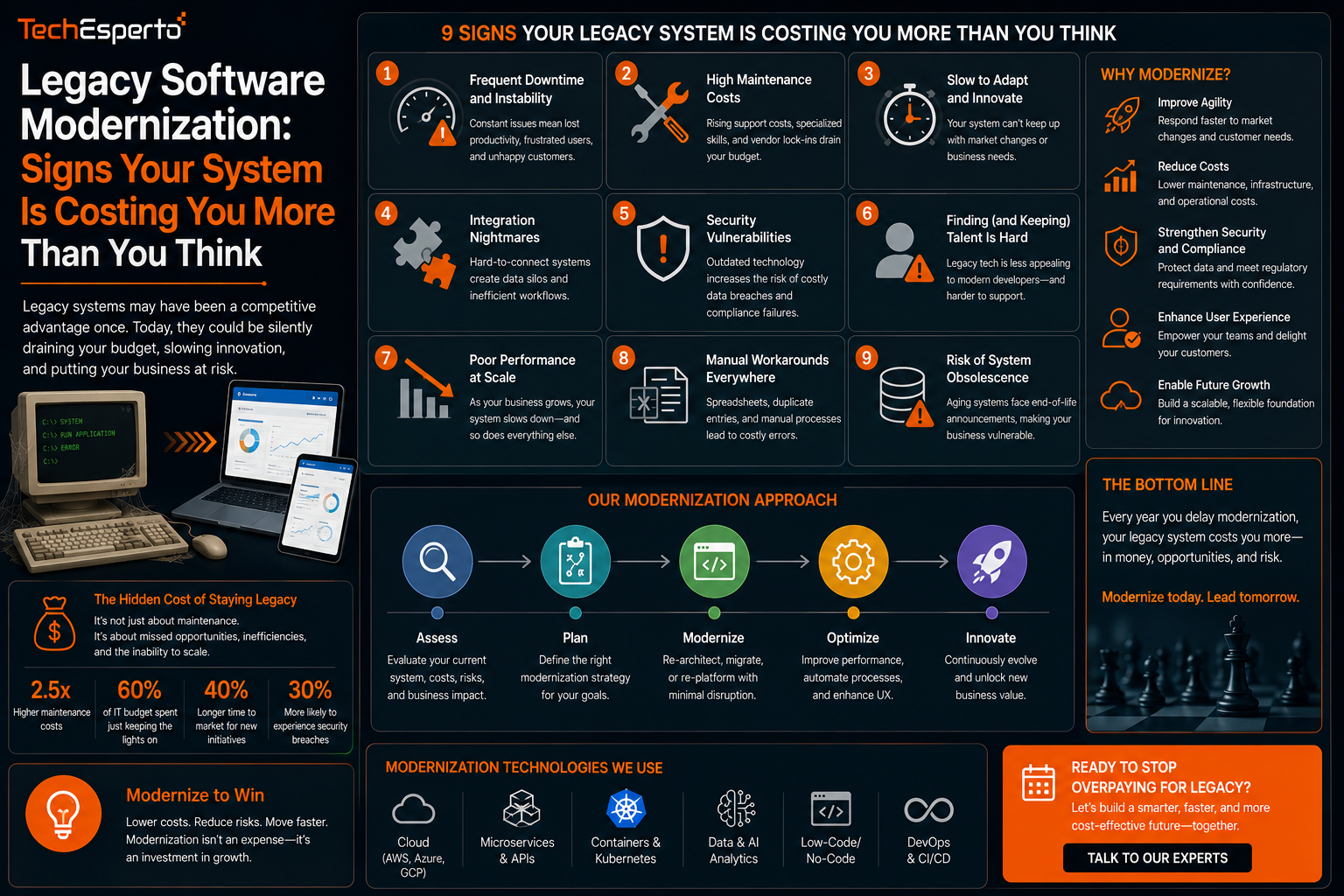
Legacy Software Modernization: Signs Your System Is Costing You More Than You Think
Legacy software modernization signs are usually visible well before a system actually fails, but they tend to be dismissed individually as minor annoyances rather than recognized collectively as evidence that a system has become a genuine liability. This post covers the specific warning signs worth paying attention to, and how to weigh the real, often underestimated cost of continuing to run an aging system against the cost of modernizing it.
Why Legacy Systems Rarely Fail Suddenly
Most businesses do not wake up one day to a complete system failure. Instead, legacy systems degrade gradually, with small workarounds accumulating over years until the system requires constant manual intervention just to keep functioning at a basic level. Recognizing the pattern early, rather than waiting for a dramatic failure, is what separates a planned modernization from an emergency one.
Rising Maintenance Costs Relative to Value Delivered
Increasing Developer Time for Small Changes
A clear sign of a system in trouble is when even small feature requests or bug fixes take disproportionately longer than they should, because developers are navigating undocumented code, outdated frameworks, or tangled dependencies built up over years. If the time cost of simple changes keeps climbing, the system’s maintenance burden is likely outpacing its actual business value.
Difficulty Finding Developers Willing to Work on the System
Legacy systems built on outdated technology stacks often struggle to attract developer talent, since most engineers prefer working with current tools and frameworks. This can lead to a shrinking pool of people both willing and able to maintain the system, driving up cost and risk over time as fewer people understand how it actually works.
Integration and Compatibility Failures
As newer tools and platforms become standard across an industry, a legacy system that cannot integrate cleanly with modern software becomes an increasingly isolated island within the broader technology stack, forcing manual data transfer or workarounds that introduce error and inefficiency. This becomes especially costly when a business needs to connect the legacy system to newer platforms for API integration services and discovers the legacy architecture cannot support modern integration standards without significant custom work.
Security and Compliance Risk
Older systems frequently run on technology stacks that no longer receive security updates, creating vulnerabilities that a business may not even be fully aware of until an audit or, worse, an actual breach reveals the exposure. This risk compounds over time, since patching an outdated foundation becomes progressively harder the longer it goes unaddressed, and regulatory requirements around data handling often assume capabilities, such as detailed audit logging, that older systems were never built to support.
Performance Bottlenecks That Limit Growth
A legacy system built for a much smaller scale of data or users often begins to show performance degradation as a business grows, with slower load times and occasional outages becoming more frequent under increased demand. Unlike a modern, scalable architecture, older systems are frequently not designed to scale horizontally, meaning the only response to growing demand is often expensive and limited hardware upgrades rather than genuinely improving the system’s capacity.
Weighing the Cost of Modernization Against the Cost of Waiting
Modernization is a real investment, and it is reasonable to weigh it carefully rather than pursuing it reflexively. But the comparison should include the full cost of maintaining the legacy system, including rising developer time, security risk, and lost opportunity from features the business cannot build because the system cannot support them, not just the sticker price of a modernization project. This full comparison is often the deciding factor in legacy software modernization decisions, since the ongoing cost of an aging system, spread out over years, frequently exceeds what businesses initially assume.
Key Takeaways
Legacy systems typically degrade gradually rather than failing suddenly, which means warning signs are often dismissed individually rather than recognized as a pattern. Rising developer time for small changes and difficulty finding talent willing to maintain outdated technology are early indicators worth tracking. Integration failures, security risk, and performance bottlenecks compound over time as a system ages further behind current standards. And a full cost comparison, including the hidden ongoing cost of maintaining the legacy system, usually gives a clearer picture than comparing only the upfront cost of modernization.
Frequently Asked Questions
How do I know if my system genuinely needs modernization versus routine maintenance?
If maintenance costs and time for simple changes keep increasing over successive projects, rather than staying relatively stable, this pattern usually indicates the system has crossed from routine maintenance into a genuine modernization need.
Is legacy system security risk really significant if it hasn’t been breached yet?
Yes. The absence of a known breach does not mean vulnerabilities do not exist, particularly for systems running on technology stacks that no longer receive security patches.
Does legacy modernization always mean replacing the entire system at once?
No, many modernization projects take an incremental approach, replacing or updating specific components over time rather than requiring a complete system replacement in a single project.
How can a business estimate the true ongoing cost of a legacy system?
Tracking developer hours spent on maintenance versus new development, along with any lost business opportunities from features the system cannot support, gives a more complete picture than looking at direct costs alone.
What industries are most affected by legacy system risk?
Industries with strict compliance requirements, such as healthcare and financial services, tend to face the highest risk from legacy systems, since regulatory expectations around data handling and security often exceed what older systems were built to support.